
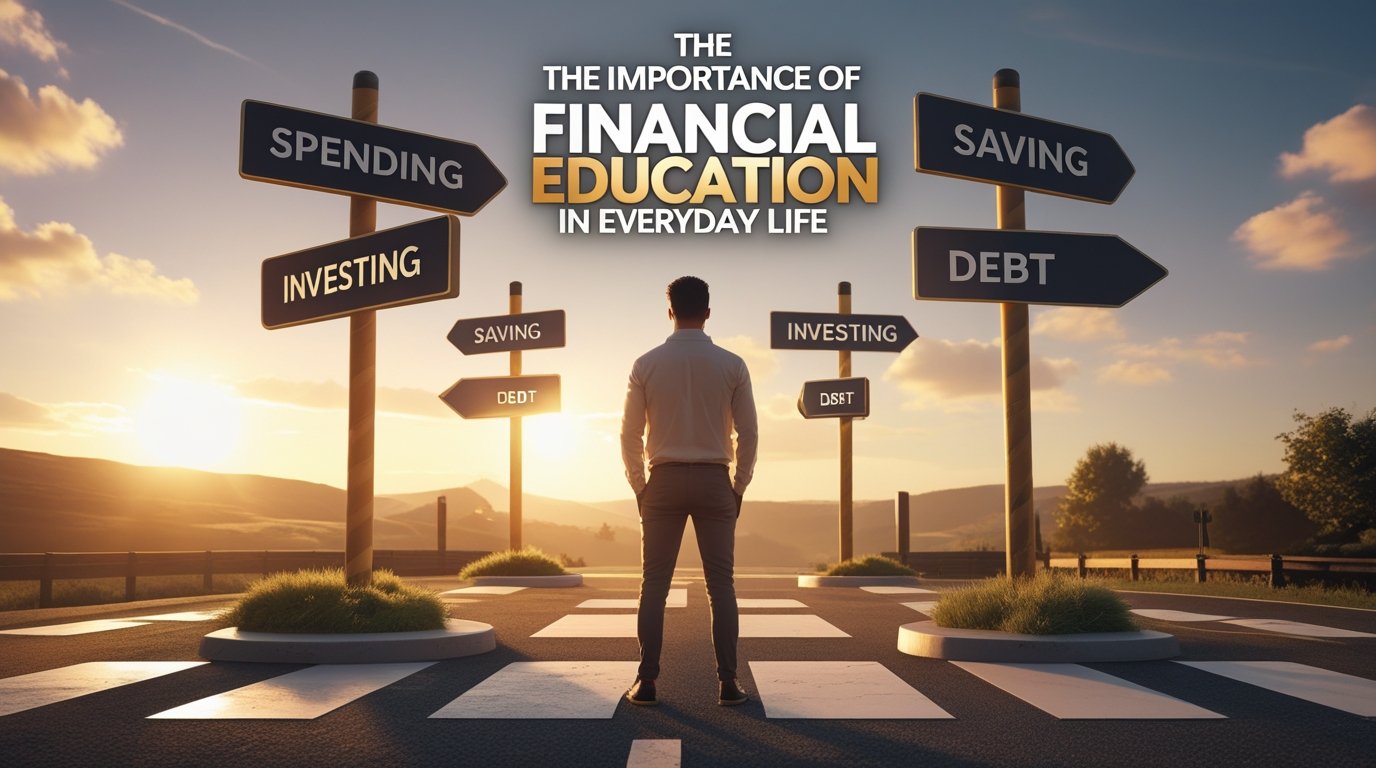
In the current era, financial education is not only for businessmen or investors, but it is also important for every person, from a teen to an elderly person. We take decision related to money daily, whether buying groceries, paying bills for utilities like phone, electricity, etc., or saving money for the future.
If you have no financial knowledge, the small mistakes can be converted into big losses. Financial education teaches us how to manage money and to control the cash flow of our income, and how to achieve financial goals in the short term and long-term phase this topic highlights the importance of financial education in our daily life.
1. The Importance of Budget and Control of Expenses:
In financial education, the first and major pillar of financing is budgeting, when a person tracks and records their income and expenses cycle, so they are aware of how their cash flow throughout the month or year, so they can easily manage their cash flow to control the expenses and income and directed toward their requirements. Oftentimes, people complain that the money will not stay in their pockets, and they drain their accounts and take on financial stress. Financial literacy teaches us the differences between needs and wants, and it helps you to prioritize your needs and control your expenses on luxury item then saving automatically tends to increase.
This habit of budgeting helps you to organize the cash flow of your income and expenditure and make life stress-free from any financial burden.
2. Prepare for Any Emergency Situation:
Life is full of uncertainty and unpredictability. At any instant their will be a medical emergency, job loss, or unexpected expense that will be there for you. If you do not have an emergency fund, then at that moment you may take a loan from a bank or any financial institution, or depend on any trusted person.
Financial education teaches us and emphasizes that a specific percentage of money should be saved for emergency funds to avoid unnecessary debt or financial stress. This small step builds a foundation of an emergency fund that will help us to face any financial issue in life and build a confidences to face any emergency
3. Debt Management and Smart Decisions:
Nowadays, credit cards and easy loans are easily available. But the correct use of this loan is help in any financial condition, but there is another side to it, that if a person can’t use it meaningfully, that become a trap, and most people will fall into this trap and lose their financial and mental peace due to lack of knowledge about it, and in most cases, the victim committed the suicide or attempt the suicide.
Financial education teaches us how to use a loan in such a way that it helps us not fall into worries about when to take a loan, such as if you need it, and you have a clear plan of repayment for the loan, and also teaches us the terms and condition plus the interest rate and condition under which the loan safe as for a moment. Avoiding debt or meaningful use of debt is an important skill. When a person controls his debt, his financial stability will not be compromised, and take better decisions for future financial goals.
4. Long-term Goals and Financial Stability:
Every person has some long-term goals like buying a house, starting a business, or securing retirement. To achieve these goals, mere desire is not enough; planning is also necessary. Financial education makes us understand the concepts of saving, investing, and patience. When we adopt disciplined financial habits in daily life, we gradually come closer to our goals. Financial stability is not achieved in a day, but is the result of small, smart decisions every day.
Conclusion:
Financial education plays a powerful role in shaping our everyday lives. It is not limited to businessmen, investors, or high-income earners; it is essential for every individual who deals with money, which means everyone. From managing daily expenses to planning long-term goals, financial knowledge helps us make smarter and more confident decisions. Without it, small financial mistakes can slowly grow into serious problems such as debt, stress, and instability.
Budgeting teaches us how to control our income and expenses, helping us distinguish between needs and wants. Building an emergency fund prepares us for unexpected situations like medical emergencies or job loss. Understanding debt management protects us from falling into financial traps caused by careless borrowing. Most importantly, financial education gives direction to our long-term goals by teaching us the importance of saving, investing, and patience.
Financial stability is not built overnight. It is the result of consistent discipline, informed choices, and responsible money management. When we improve our financial literacy, we not only secure our future but also reduce stress in our present life. In simple words, financial education is the foundation of a stable, confident, and financially secure lifestyle.
FAQs:
1. Why is financial education important in daily life?
Financial education helps us manage daily expenses, control spending, save money, and make smart financial decisions that prevent future problems.
2. What is the role of budgeting in financial stability?
Budgeting helps track income and expenses, allowing individuals to control spending, prioritize needs, and increase savings.
3. Why is an emergency fund necessary?
An emergency fund provides financial support during unexpected situations like medical emergencies, job loss, or urgent repairs, helping avoid unnecessary debt.
4. How does financial education help in debt management?
It teaches responsible borrowing, understanding interest rates, reading loan terms carefully, and creating a repayment plan to avoid financial stress.
5. Can financial education help achieve long-term goals?
Yes. Financial education encourages saving, investing, and disciplined money habits, which gradually help achieve goals like buying a house, starting a business, or retirement planning.